If you’ve been researching gaming keyboards, especially newer Hall Effect keyboards, you’ve probably come across the term SOCD.
Manufacturers often advertise features like “SOCD Cleaning,” “SOCD Resolution,” or “SOCD Support” alongside technologies such as Rapid Trigger and adjustable actuation. But what exactly does SOCD mean, and why has it become such a hot topic in competitive gaming?
The short answer is that SOCD stands for Simultaneous Opposite Cardinal Directions. It refers to what happens when a player presses two opposite directional inputs at the same time, such as left and right or up and down.
While that might sound simple, SOCD handling can have a major impact on movement, precision, and competitive fairness in games ranging from fighting games to first-person shooters.
In this guide, we’ll explain exactly what SOCD is, how SOCD cleaning works, why gaming keyboards support it, and whether it actually provides a competitive advantage.
What Does SOCD Stand For?
SOCD stands for:
Simultaneous Opposite Cardinal Directions
In gaming, cardinal directions refer to movement inputs such as:
- Left
- Right
- Up
- Down
An SOCD input occurs whenever a player activates two opposite directions simultaneously.
Examples include:
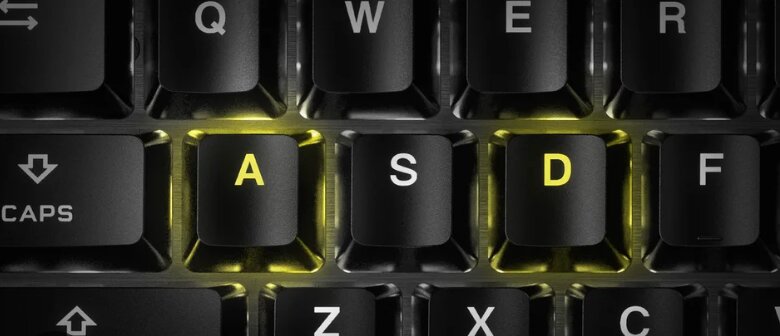
- Pressing A and D at the same time
- Pressing Left and Right together
- Pressing Up and Down together
Since a character generally cannot move in opposite directions simultaneously, the game or input device must determine which command takes priority.
This is where SOCD cleaning comes into play.
What Is SOCD Cleaning?
SOCD cleaning is a method used to resolve conflicting directional inputs.
When opposite directions are pressed simultaneously, SOCD cleaning determines the final input that gets sent to the game.
Without SOCD cleaning, the game could receive inconsistent or unintended commands.
For example:
Scenario 1
You press:
- A (Move Left)
- D (Move Right)
at the same time.
The keyboard must decide:
- Should left win?
- Should right win?
- Should both cancel each other?
- Should the most recent key win?
SOCD cleaning applies a predefined rule to resolve this conflict.
Common Types of SOCD Cleaning
Different devices and games may handle SOCD differently.
Neutral SOCD
This is one of the most common methods.
If left and right are pressed simultaneously:
- Left + Right = Neutral
The character doesn’t move in either direction.
Many fighting game tournaments have historically preferred this method because it avoids giving either direction an advantage.
Last Input Priority
Some modern keyboards use a system where the most recently pressed key takes priority.
Example:
- Hold A
- Press D
Output:
- Right
If D is released:
- Output returns to Left
This approach creates extremely responsive directional changes.
Many Hall Effect gaming keyboards now use this method.
First Input Priority
Some systems prioritize whichever key was pressed first.
Example:
- Hold A
- Press D
Output remains:
- Left
until A is released.
This approach is less common in modern gaming keyboards.
Why Is SOCD Important?
For casual gaming, SOCD may not matter much.
For competitive players, however, it can significantly affect movement and responsiveness.
Benefits include:
Faster Direction Changes
Players can instantly switch directions without fully releasing the previous key.
This can improve movement efficiency in many games.
Improved Accuracy
SOCD cleaning helps ensure that intended inputs are registered consistently.
This reduces accidental movement errors.
Consistent Gameplay
Players receive predictable movement behavior every time they press conflicting keys.
Consistency is especially important in competitive environments.
SOCD in Fighting Games
SOCD first gained widespread attention in the fighting game community.
Controllers known as “Hitbox” controllers replaced traditional joysticks with directional buttons.
Because players could press opposite directions simultaneously, tournament organizers needed rules governing how these inputs should behave.
Games such as:
- Street Fighter
- Tekken
- Guilty Gear
- Mortal Kombat
often include official SOCD handling rules.
In many fighting games:
- Left + Right = Neutral
- Up + Down = Up
This prevents players from exploiting unusual movement techniques while maintaining fair competition.
SOCD in FPS Games
Recently, SOCD has become a major topic in first-person shooters.
Games such as:
- Counter-Strike 2
- VALORANT
- Apex Legends
- Overwatch 2
have brought renewed attention to SOCD-enabled keyboards.
In these games, quick directional changes are extremely important.
For example:
A player holding A to strafe left can instantly press D to reverse direction.
With last-input-priority SOCD:
- Movement changes immediately.
- Counter-strafing becomes faster.
- Peeking corners feels more responsive.
This can improve precision and reaction time.
SOCD and Hall Effect Keyboards
Many modern Hall Effect keyboards include advanced SOCD functionality.
Popular examples include:
- Wooting keyboards
- Razer Huntsman V3 Pro
- SteelSeries Apex Pro
- Keychron Hall Effect models
Hall Effect switches use magnetic sensors instead of traditional mechanical contacts.
This allows keyboards to process input changes with exceptional precision.
Manufacturers often combine:
- Rapid Trigger
- Adjustable Actuation
- Dynamic Keystrokes
- SOCD Cleaning
to create highly responsive gaming experiences.
Because Hall Effect keyboards can detect movement extremely quickly, SOCD becomes even more valuable.
Is SOCD Considered Cheating?
This has become one of the most debated questions in competitive gaming.
Some players argue that advanced SOCD behavior provides a measurable advantage.
Others view it as simply another hardware feature, similar to a high-refresh-rate monitor or lightweight gaming mouse.
As a result, some game developers have implemented restrictions.
For example, competitive games may:
- Restrict certain SOCD behaviors
- Normalize directional inputs
- Detect automated movement techniques
Tournament organizers may also establish specific rules regarding SOCD-enabled devices.
Whether SOCD is allowed depends on the game, tournament, and specific implementation.
SOCD vs Rapid Trigger
Many gamers confuse these two features.
Although they are often found together, they serve different purposes.
| Feature | Purpose |
|---|---|
| SOCD | Resolves opposite directional inputs |
| Rapid Trigger | Adjusts key reset points dynamically |
| Focus | Movement handling |
| Focus | Input responsiveness |
SOCD determines what happens when conflicting directions are pressed.
Rapid Trigger determines how quickly keys activate and reset.
Together, they create highly responsive movement controls.
Do You Need SOCD?
The answer depends on how you use your keyboard.
You May Benefit from SOCD If:
- You play competitive FPS games
- You play fighting games
- You want faster directional changes
- You use a Hall Effect keyboard
- You enjoy optimizing performance
You Probably Don’t Need SOCD If:
- You mainly browse the web
- You use your keyboard for office work
- You don’t play competitive games
- You prefer traditional keyboard behavior
For most casual users, SOCD is simply a nice bonus rather than a must-have feature.
Frequently Asked Questions
What does SOCD stand for?
SOCD stands for Simultaneous Opposite Cardinal Directions.
What is SOCD cleaning?
SOCD cleaning is the process of resolving conflicting directional inputs such as pressing left and right simultaneously.
Why do gaming keyboards have SOCD?
Gaming keyboards use SOCD to provide more predictable and responsive movement behavior in competitive games.
Is SOCD useful for FPS games?
Yes. Many competitive FPS players use SOCD-enabled keyboards because they allow faster directional transitions and cleaner counter-strafing.
Is SOCD the same as Rapid Trigger?
No. SOCD resolves conflicting movement inputs, while Rapid Trigger changes how keys activate and reset.
Can SOCD get you banned?
Generally no, but some games and tournaments may limit certain SOCD behaviors. Always check the rules of the game or competition you’re participating in.
Final Thoughts
SOCD stands for Simultaneous Opposite Cardinal Directions, and it refers to the handling of opposite directional inputs such as left and right being pressed at the same time.
While originally associated with fighting game controllers, SOCD has become increasingly important in modern gaming keyboards, particularly Hall Effect models designed for competitive play.
For most users, SOCD is simply another keyboard feature. For competitive gamers, however, proper SOCD implementation can improve movement consistency, directional control, and overall responsiveness.
As gaming keyboards continue to evolve, SOCD will likely remain one of the most discussed technologies among enthusiasts looking to gain every possible advantage.